“A History of Heartache” Is a World Where No Saviors Are Coming https://ift.tt/A3wixp0
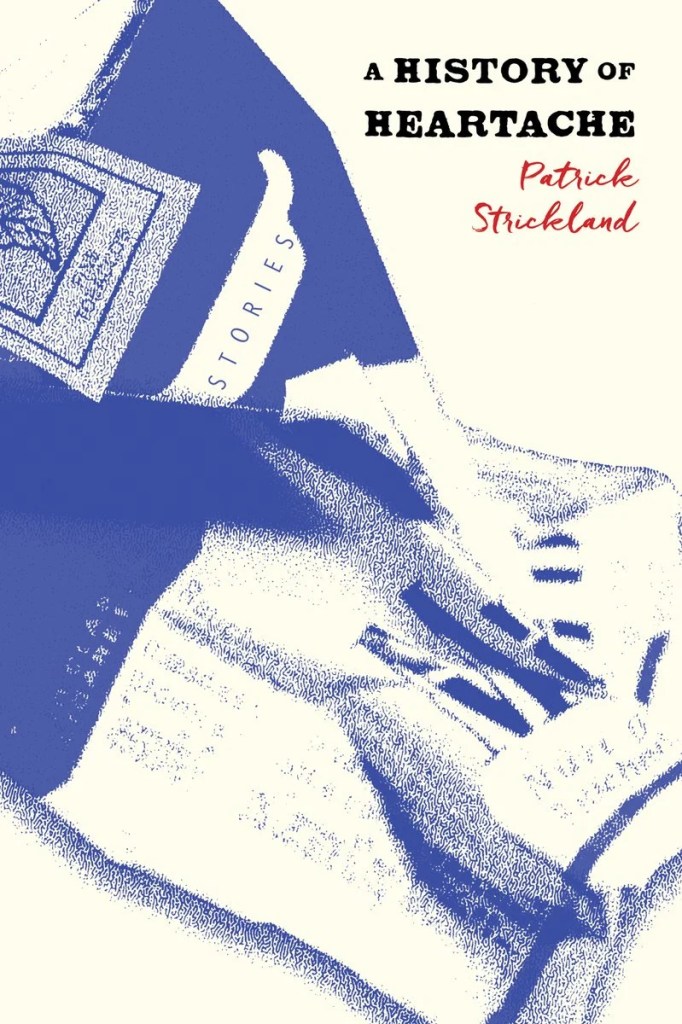
The raw, tender line between hurtful and healing is where Patrick Strickland writes from in A History of Heartache. The fourteen stories in this collection find the forgotten folks in America (especially in East Texas) to show torment and triumph as they make it from one day to the next. More importantly, these show what prodigal children have to return to in a place that has left them behind.
This process begins at a sentence level. Strickland’s lines are quick and sharp like the broken syringes strewn about the towns in these stories. And like the syringes, the good stuff follows a painful pinch. Strickland sets this up by creating characters that are of the lowest social stratification; the rich have Audis, the poor survive on junk food, but the folks that interest Strickland live in structures they can’t be sure will be there in the morning. In the book’s eponymous first story, the main character is trying to leave a town known for a “TEXAS HEROIN MASSACRE.” And just like most characters in Southern Grit Lit, the lack of belief, resources, and general goodwill keeps him stuck. What’s left but to scrap with the other prisoners of this place, at least those who are more well off. This story sets the tone for the rest of the book: people are locked in place, fighting against all the pain it causes, only to be purified by it.
It would be understandable for every main character to be angry at the world or their station in life. But almost all of them swim in self-disgust. Loathing is about not being braver. It can come from not having a good enough reason to be an alcoholic, or having let others hurt who they love. The redeeming quality of each character is that they want something better, to stand up, to try again, even if it is always out of reach. Through their actions and their fury, and sometimes through their surrender, we see what kind of people they could have been if only the world had been kinder to them.
These characters are on their own and at the mercy of the world. As Tex says when he returns home in “Screaming East on I-10,” “The way some hand you can’t see takes a fistful of your guts and forces you back to your feet.” Those hands often aren’t there to help. No saviors are coming for these folks. They redeem themselves anyway. This may be what Strickland brings to literature. For an author to take the audience so deeply into degradation, it can start to feel like drowning. But just when it seems like the air is spent, a character will burst back to the surface, flailing and gasping, ready to fight again. Whether that fight is to hurt or to heal is just what this book aims to find out.
Bullies and frauds line the spine of this book. Some remain comfortably evil to the end. But in the more disturbing stories, they become objects of pity. In “Dead Cats,” the vile juggernaut Mannard slings a sack of cats he collects off an overpass. Strickland somehow takes the disgust inherent in this scene and juxtaposes it against the cruelty exacted on this young boy by the horrible men around him. With the inability to earn empathy, and so few tools, the tormented turn to tormentors wielding violence without discretion. Don’t worry, though. All bullies meet their just ends here.
Many of the stories have endings that go much deeper than where Strickland decided to close. In one, an entire bloodline ends. And the feeling left is not sadness or anger, but relief. In “Rooster,” after a suicide that the main character blames himself for and is haunted by, he recounts all the awful ways people around him die or almost die. When a fire consumes the bar they’d always gathered at, destroying the place that was supposed to be freedom from heartache, but instead caused it, it’s as if those who remain are released. Even though the Rooster continues to haunt the main character, he finds, “It doesn’t matter what he thinks. Not anymore.”
Beyond the pain and the characters who bear it, this book is commentary on the ways America abandons its people to fend for themselves in an increasingly chaotic society. With timelines that span the latter part of the twentieth and early aughts, Strickland moves the question from “What are they fighting for?” to “Why is everything a fight?” Roaming gangs of violent young men are a fixture here, showing how power is the swill left when kindness has been used up like every beer in this work. Each white male character feels victim to a world he believes he should control – but cannot. This culminates in the last story, “The Han Gil Hotel.” Two friends, who’d been able to leave Dallas and get clean, and another who remained, the arms of addiction firmly wrapped around him, find their way back to a hotel they used to get high at. In reflecting on their relationship, along with the telling of the current moment, it almost sounds as if the two are just white America talking to itself. The junkie, Ron, asks the main character why he abandoned him. Staring at an opulent downtown Dallas skyline, our narrator remarks on how much good could be done with the money spent just to keep green lights on. His friend Ron’s response is, “It’s America … Every man for his self.”
Bleak but clear-eyed, abrasive but thoughtful, these stories show a shadow world existing in the corners of our current moment, threatening to grow and take over like the blight of every neighborhood contained in these pages. These characters do not have much agency, and the impact of their self-destruction ripples across our collective conscience. Their circumstances are sometimes built out of their own choices, sometimes the random universe’s mindless meddling. But each of their stories can recount the history wrought by heartache, both theirs and our own.
FICTION A History of Heartache
By Patrick Strickland
Melville House
Published April 21, 2026







0 Commentaires