A Manifesto for Collective Healing in Appalachia https://ift.tt/mNM02CS
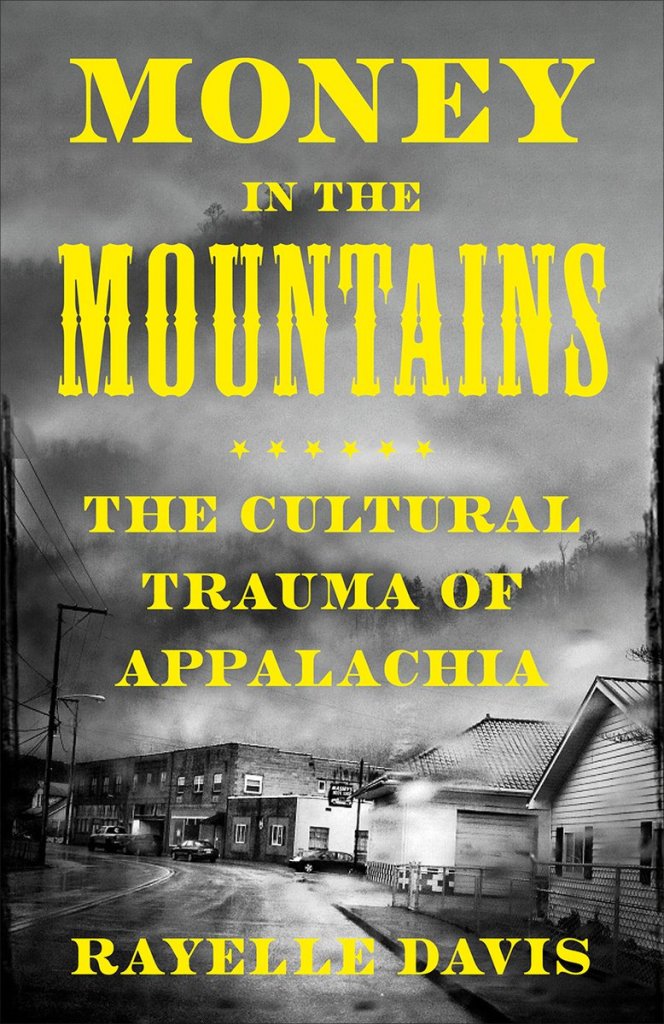
Rayelle Davis’ Money in the Mountains: The Cultural Trauma of Appalachia makes a clear, compelling argument: “Generational trauma and poverty aren’t the problems in Appalachia. They are the symptoms of collective abuse.” Davis supports this statement with historical and cultural context as well as her own personal experience as an addiction counselor in Appalachia, but Money in the Mountains is not an academic monograph. Instead, it is a “manifesto for collective healing” (as Pluto Press writes in the ad copy). Ultimately, the book’s brevity and tone urge readers toward a more hopeful future for all.
Money in the Mountains is short and to the point, but it also dovetails beautifully with a range of recent works about the region and related topics, including larger scale works like Empire of Pain by Patrick Radden Keefe or Soul Full of Coal Dust by Chris Hamby, or other slim volumes such as Elizabeth Catte’s What You Are Getting Wrong About Appalachia. Davis offers a sort of cultural overview of the region as well as background information about how extractive capitalism (specifically coal mining) and the opioid epidemic have interacted with the culture and ethos of Appalachia.
What is most effective about Davis’ book, and what sets it apart from related works, is its previously-mentioned manifesto style, punctuated by snappy, memorable statements. Throughout the book, most chapters begin with a punchy sentence or two conveying that chapter’s contribution to the overall argument. For example, one chapter begins: “I love being a therapist, but I hate the mental healthcare system.”
An academically inclined reader like myself might expect more robust in-text citation practices, but in order to keep the book short and focused, Davis forgoes footnotes or parentheticals and opts to list references collectively at the end of the work. This choice makes it more difficult to trace specific claims to their precise source, but again, Davis does not seem to be crafting an academic argument. Instead, she opts for the declarative tone more common in manifestos.
For Appalachians, her appeals may land with the rhetorical force of a therapist observing a patient’s own bad habits. The approach feels loving, even when the truth of it may be difficult to hear. To pull off this rhetorical effect, Davis further establishes her credibility with sections that read more like memoir. By incorporating vivid personal details that are still clearly anchored to the book’s main arguments. Davis demonstrates that her insights are experiential as well as academic and observational. Despite her close ties to Appalachia, where she was born and raised and where she still lives and works, Davis writes: “So, even though I never left, I wasn’t from Appalachia anymore,” after attending graduate school. This feeling is familiar to me as a fellow Appalachian with an advanced degree, and I imagine that it will resonate with others as well.
Significantly, though, both Davis and I are still from Appalachia, regardless of how other folks from our homeplace might characterize us. And being from Appalachia isn’t a negative, either, regardless of what our colleagues and other academics might think. Davis makes a crucially important point: “Appalachia is not an aberration. It is a preview of what happens when the ruling class no longer benefits from our labor.”
According to Davis, “Appalachia is the canary in America’s coal mine. What’s happening — the despair, the addiction, the hollowing — isn’t the failure of a few broken people. It’s the warning sign of a broken system.” The brokenness of the system is not limited to one group or one region. Thus, Davis suggests that directly confronting the ways that colonization and white supremacy have affected Appalachia will allow all of us to “rewrite the narrative, not just for Appalachia, but for all communities impacted by the forces of exploitation and abuse.”
If we consider Money in the Mountains to be a “manifesto for collective healing,” we gain insight into the many ways that the systems of injustice that we all inhabit have wielded cultural values as weapons against not only Appalachia but working people and marginalized people across space and time. For those who are seeking an insider perspective on how systems of power continue to affect Appalachians, Davis’ Money in the Mountains is a quick read that will refresh your knowledge of the region’s culture and history while also calling you to hopeful action and healing.






0 Commentaires