“Broken Houses”: Seeking Roots in an Uncertain World https://ift.tt/sGBWIH9
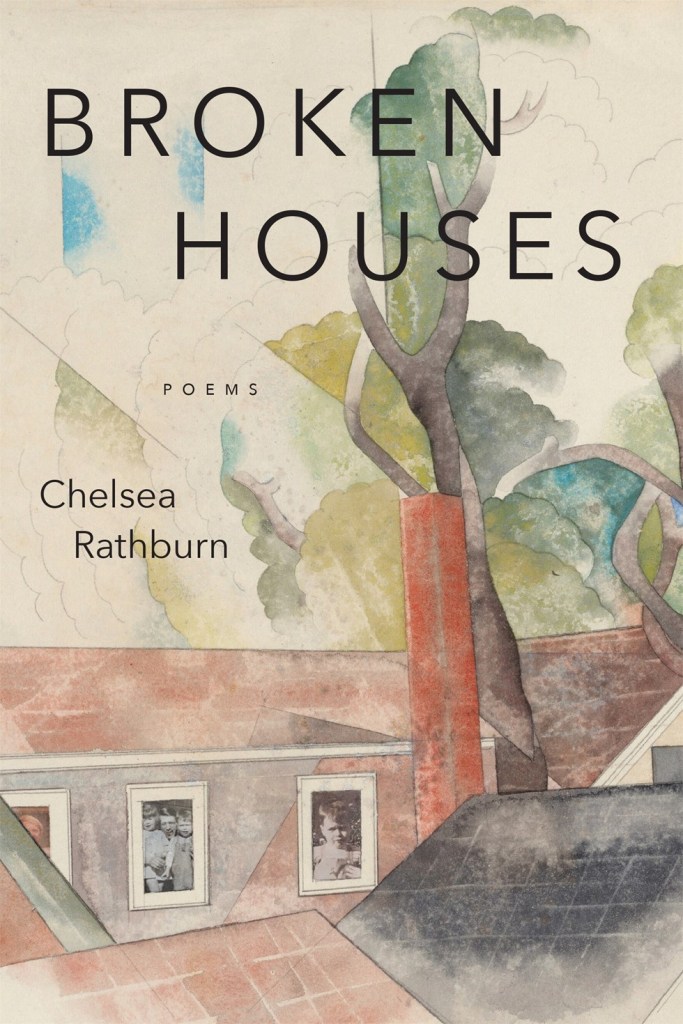
Location, location, location! Rathburn’s Broken Houses opens with the speaker’s parents, in a poem titled “Loved Houses,” window-shopping houses they can’t afford. The title may as well read “Loved Homes” as we see the cottage, the South Beach studio, the family home, all with their own forms of curb appeal, pass the couple by, leaving them peering over the wall at the Hemingway House in Key West, Florida, and imagining a home as large and expensive as that. Rathburn’s poems remind us, however, there is another key element to an ideal home: good bones.
A professor of mine once said, during an introduction course on poetry, we needed to know the bones of what we were working with in front of us. This came after the classic, expected comment from another student that “poetry’s rules are there to be broken!” How can we edit without knowing the core rules of what we intend to dismantle or attend to? How can we renovate without knowing what is or is not load-bearing? In a country that continues to reckon with the question of what it means to belong to the places we inhabit, and who gets to decide who inhabits and who belongs, Broken Houses offers a forceful reminder that a home is not just a house, and a house is not always a home.
This collection of poems senses the tragedy of displacement and laments a country’s always looking to build something newer, something shinier, flashier, something that really speaks to that American Dream we still chase and how, of course, it is very much still alive. The poems here bear witness to the cost of building we often don’t see or forget. The poem “The Locksmith” shows us a locksmith who gets to work on Sylvester Stallone’s mansion and recounts its opulence and grandeur, so very unlike the life he and the speaker live, but our speaker knows the street the mansion is situated on for a different reason — a classmate of theirs was accosted by a man and, to escape, jumped off the seawall and waded to those same mansions after waiting out the stranger.
“The Bag Lady” shows us that home may just be those things, those bags, we can shoulder and stash by the door and nothing more. “Terroir” appreciates all the minute circumstances that make up a human life. In “Bone Houses,” home becomes the body, the skeleton, the cemetery, mansions and mausoleums built on the backs of others. From the stark contrast between the façade of Hollywood actors and the grim reality of potential threat, we learn the true heroes of Broken Houses are the survivors, the blue-collar hopefuls, just looking to keep their heads above water.
However, this collection doesn’t romanticize the level of poverty some citizens in America are unable to escape. It does question whether we are still, after all these years, pursuing the wrong end goal in our lives. The poet relies heavily on her own experience, the experiences of relatives (adopted and biological), as well as historical research to draw these poems closer to their lived truths without sacrificing the integrity of each poem. The line breaks and stanza breaks throughout are clean and offer a tight, rewarding unfolding of images and narrative across the poems included here. Mostly free verse with an odd sonnet or rhyme in the mix, the poems’ tightness and orderliness juxtapose nicely with the broken or messy interiors of many of the subjects and locales presented. They box in and keep safe their internal worlds. In a poem titled “Unbuilt Houses,” the internal rhyme provides a sense of completeness even in a world wracked with uncertainty.
"It wasn’t breaking and entering,
       my parents swore, if a door
             was already open

or if there were no doors,
        and so we made a habit
              of slipping inside half-built

houses for furtive tours.
      Construction crews gone home,
            we passed like ghosts through walls

that we could ill afford…”
This poem’s appearance on the page, its staggered, cascading line placement, and its arrangement in tercets speaks to the semi-fractured reality of the speaker’s childhood with their parents. Life seems uncertain for this family as they navigate the world they have been dealt, but the internal rhymes of “swore,” “door,” “tours,” and “afford” all come off the speaking of the parents. The child here trusts in the presence of family despite the situation at hand. There is certainty in the memory, the poem, during uncertainty of the world.
The same rings true for the backdrop of this collection: Florida. What begins as a kind of ghostly place for the speaker slowly materializes into certainty, just not as one might imagine. The state features glancingly in some poems — directly via Key West in the opening, transformed via the artists Christo and Jeanne-Claude’s exhibition Surrounded Islands in Miami, or through aforementioned “terroir” via its inhabitants. Just as wine’s flavor is subject to its unique circumstances — seasonal weather, harvest, soil composition — and people consist of millions of smaller moments building atop one another, a place’s identity is in its people. The familial intimacy this poetry collection brings to these people reinforces the idea that Florida should not just be known for its natural beauty, worthy in itself of being protected and nurtured, but also its human beauty, a diverse population of people cohabiting and surviving shoulder-to-shoulder, more alike than different.
Bone Houses is root-seeking in a world that seeks to uproot. It recontextualizes our American Dream of home ownership and reminds us that even if we do not want for much, our neighbors may not have such luxury. It gives a glimpse at a real, complex family and what it means to belong to one. It turns over in its hands horrors, real and imagined, whether disasters or poltergeists, and, to each locale the poems inhabit, the poet plays the role of benevolent haunt, taking a moment to sift through the ghostly world of the speaker’s past and their parent’s past. She asks us to consider what it is we live for, how and why. “…Love, oh love, can love be enough / to save us, can I be life vest and vessel and breath?”
POETRY Broken Houses By Chelsea Rathburn LSU Press Published July 29, 2026




0 Commentaires