Growing Up by Middle Age in “Fancy Meeting You” by Louise Marburg https://ift.tt/lJB5oi8
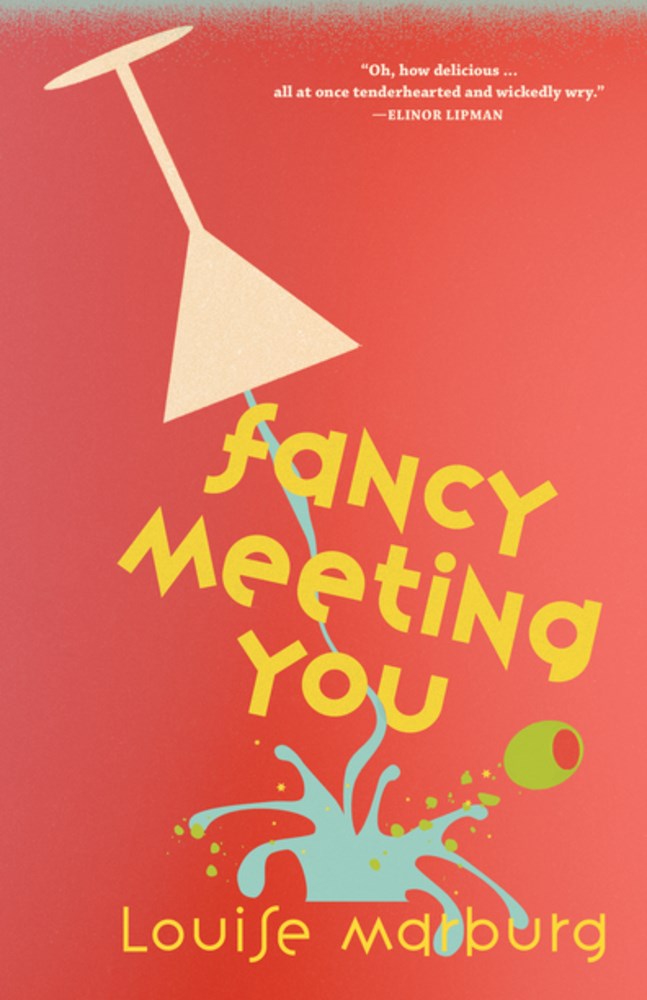
At the center of Louise Marburg’s comic novel, Fancy Meeting You, is a high-functioning alcoholic, Laura Harrigan. Living well below her aptitude as a Harvard graduate, she often calls in sick — hungover — to her job fact-checking textbooks. She concedes: “Ambition is a mystery to me.” This makes her refreshing company in 2026. Her hilarity is a big bonus.
After publishing three collections of short stories, Marburg offers her first novel in the form of a coming-of-age narrative, or reifungsroman — the kind of word Laura might bandy around to her friends as a feeble show of intellect. A self-described “hetero, pseudo-Episcopalian white woman, as exotic as grape jelly,” she turns fifty when the book opens and “fifty again” at the end. Born and seemingly bound to remain in Baltimore, also Marburg’s hometown, Laura’s trajectory never quite aligns with what others expect.
In each of the fifteen chapters spanning a single year, Laura encounters or creates squeamish situations, fulfilling the title by meeting someone unexpected at each turn. Much of her humor relates to her alcohol use, even when she’s most vulnerable. After confessing a broken heart, Laura realizes her “face is hot from this sudden unburdening.” She continues: “I feel like a sappy character in a novel … I can’t think why I’m telling a stranger five years after the fact. It must be because I’m sober way past the time I should be drunk.”
I admit to some early wariness because the first paragraph opens with the stench of a sea lion, like that of “a Bowery bum.” One of my pleasures of reading about humans in books is that I can’t smell them or hear their bodily expulsions in person; I’m usually not asked to even imagine them. But one line after I gag along with Laura, I’m guffawing, forgetting any preference for decorum the rest of the way. At a party, Laura propositions a younger male aide from her father’s assisted-living facility, and the deed is coldly carried out in a bathroom. Afterward, she retreats to a side room to watch television. Her sister, the host, entreats her to mingle. “‘Believe me, I’ve mingled,’” Laura says.
In addition to the plot’s episodic structure, a few short-story touches persist, including not always acknowledging what the reader already knows. For instance, twenty-six pages following the uninspiring hook-up in the lavatory, Laura vaguely refers to “my share of bathroom sex,” without directly mentioning that unforgettable scene. This made me wonder whether some chapters were originally intended to stand alone. The story is linear with a moderate number of characters to track. Having read Marburg’s second collection, No Diving Allowed, I happily recognized traces of them in Fancy. One of the gifts of the longer form — and why some readers express frustration with the shorter — is the opportunity to invest in a character. After 202 pages of proximity with Laura, I’m now bereft without her running commentary.
Admittedly she’s a pathological liar, but her tales are mostly harmless. She wonders whether she picked up the tic when a journal assignment in seventh-grade forced her to make up stories. Perhaps she didn’t think her life was interesting then, and doesn’t now. But this supposition belies a deeper concern. Most of Laura’s fabrications involve her occupation or her marital status. Does our society not know what to make of single women who aren’t defined by careers? What’s with the persistent shame in that? How Marburg turns this status into something wonderful by the novel’s end is one its brightest charms.
For the first half of the book, Laura repels nearly everyone around her, save her friend, Javier. Theirs is not a lifelong relationship, and we may wonder whether he’ll tire of her antics. No one seems to have stuck around unless they’re bound to Laura by blood, like her buttoned-up sister and foil, Nadine, or trapped living next to her, like her neighbor Mara. And it’s Mara who’s a chief catalyst for Laura midway through the book. Change happens blessedly slow, in line with Laura’s matter-of-fact, no-bull attitude.
Just as we’re wondering where Laura might be hoarding her smarts when she’s not whipping out a one-liner, they reveal themselves in brilliant interpersonal ways. Despite being full of tequila and fibs, she applies problem-solving acumen to an array of situations — much like a psychiatrist might, which is her pretend profession in chapter one. Part of her growth is discovering the cracks in others’ lives. Not everything that looks perfect is. But her instinct for repair also speaks to that brand of saintliness we smell on alcoholics. Evelyn Waugh’s character Cordelia says of her brother, who’s dying from drink, in Brideshead Revisited: “No one is ever holy without suffering.” Laura’s sorrows might be miles away from the Bowery, but her pain must inform the selfless way she heals the marriage between an old lover and his new wife, her sister’s recent estrangement from her daughter, and her brother’s disastrous move home, just to name a few.
Reading Fancy Meeting You is a rollicking adventure, as tangy as a martini. But imbibing a novel is healthier, and there’s relief when Laura throttles her intake. A drinking habit usually starts with other people, and this story points up the dangers of being defined by the crowd. Both can be hard patterns to break, especially because relationships shape our lives. Thankfully, Laura won’t ever truly conform. Suffering may always be a part of that, but I also envision bottomless joy ahead.
FICTION Fancy Meeting You By Louise Marburg Blair Published June 02, 2026




0 Commentaires