A Mad King Awaits His Lady Love in the Absurdist “Ada” https://ift.tt/2yLo0f6
The European tyrant defined by pettiness and cruelty is a rich canvas for a writer. From Hilary Mantel’s Wolf Hall to John Williams’ Augustus, authors keep returning to royals with unmatched wealth and shackled to hereditary responsibility. Add a teaspoon of idiocy and you’ve got a dynamic vehicle for exploring the ways power not only corrupts the soul but puts one on the road to madness. Richard III. The Madness of King George. Even King John from Disney’s Robin Hood. The “mad king” is such a trope that even Game of Thrones based much of their lore off a character with that very nickname.
Then there’s Gerard Desacroux IV, the protagonist and sole voice in Mark Haber’s novella Ada. Desacroux rules over Berchtesgaden, a kingdom that’s not quite France or anywhere else really, and covers a territory populated by Saxons or Bavarians. Desacroux isn’t sure. In any case, he despises his people and wants nothing more than to return to Paris, where he once lived the life of a libertine, sleeping with one prostitute after another, sharing with them a craving for opium, and not reading books.
Instead, after his father’s death, he is forced to lead his kingdom, which involves mostly pacing his “Great Room,” awaiting Ada, a one-night stand from four or five years ago — Desacroux can’t remember — that changed the course of his life, according to him. She is now married into France’s paisley empire, and she and her husband are expected any moment to arrive at the castle, where they are to join Desacroux for dinner and, in the morning, a duel, the winner receiving Ada’s affection (her own desires are not on Desacroux’s mind). Desacroux is like that. He is the spoiled son of a spoiled son, self-absorbed, petty and cruel to the weak, anti-intellectual, legitimately fearful of poisoning or uprisings, the hero of his own story, and all the while he is starting ill-conceived wars and antisemitic pogroms in hopes of making his people love him, even though he knows they want him dead.
This type of man sounds familiar in our modern moment, and Haber, the author of the novels Reinhardt’s Garden (longlisted for the PEN/Hemingway) and Saint Sebastian’s Abyss, is well aware of the metaphor for our contemporary elected leaders and businesspeople, many of whom carry the sole talent of being born on third base with no one covering home plate. Yet, the novel never becomes didactic. The book is deeply funny, absurdist in its mix of high and low culture, a sentence-by-sentence gem that not only exposes the dark soul of the aristocracy, but manages to fully humanize Desacroux, giving him just enough heart so that he is not a caricature of wealth but a victim of a system that values bloodlines over brains.
Take this early passage, in which Desacroux talks about the destruction of his family’s reputation due to his father’s blunders: “The Desacroux name was but a subject of ridicule and contempt throughout France, he wrote, the Desacroux name a shameful token muttered only in connection to the generation lost in the Siege of Flanders, hundreds of thousands of beautiful French souls, valiant innocents, gone forever, the Desacroux family crest of fox devouring goose hatchling, once so celebrated, now caricatured as a donkey chasing another donkey, two asses in eternal pursuit.”
You can see Haber move with Nabokovian force from the high-minded, royal-tinged tone of the earlier clauses, down to a donkey joke as a kicker. Haber’s humor often comes from Desacroux’s self-seriousness mixed with his over-the-top horniness, especially in his increasingly prurient descriptions of what he’d like to do Ada.
Like one of his biggest influences, Cesar Aira, Haber keeps his story slim, weighing in at a dainty 90 pages, and one single paragraph. I was skeptical of this, worried it was a stylistic trick with no payoff, but I got used to it quickly because of the story’s narrative force. It makes sense why Haber did this. The story is told as a monologue with very few secondary characters, save Hans, the put-upon butler charged with ringing the tower bell while withstanding Desacroux’s poutiness. The single paragraph conveys the nature of the unbroken monologue, providing the feeling of Desacroux pacing the Great Room in an increasingly paranoid fit, revealing his loneliness, vulnerability, and idiocy. He is all powerful within the Great Room, but otherwise imprisoned, like the strongest man on cell block D.
Haber is more empathetic toward his ridiculous tyrant than you’d expect, and that’s what moves the story from a stylistic exercise and absurdist concoction toward an unexpected end that moved me. In a world full of wealthy children turned spiteful despots — your Trumps and Musks and Bushes — Haber creates a character that encapsulates all the follies and cruelties of inherited wealth and turns it into a work of hilarious beauty.
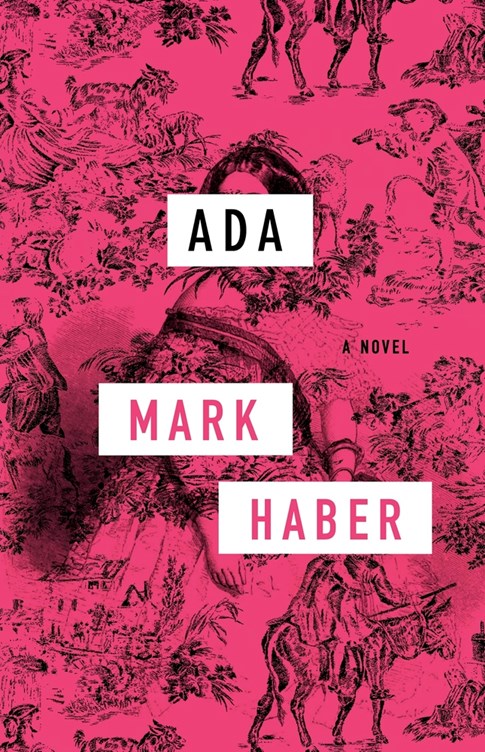
FICTION Ada By Mark Haber Coffee House Press Published July 14, 2026




0 Commentaires