“Called by Distances” is Precise and Focused https://ift.tt/rvAth4Q
“Rivers Run Through Me,” the first poem in Biljana D. Obradović’s new poetry collection, Called by Distances, provides parallel rivers, the Danube and the Mississippi, creating correspondences between places from her childhood and adult life. The poem, a deft exposition, takes its time over three sections to provide history, nuance, and a sense of the whole collection.
As an opening scene, it’s rich with dirt, pollution, poverty, hardship, deep affection, and compassion. The final stanza provides tone and colors, blue and gray waters that she recalls and consumes, drawing equivalencies across her life:
But through a bedroom window I could glimpse the blue,
beautiful Danube. So I gulped the gray water she gave me,
her hand trembling. No wonder rivers run through me,
the life I have lived, the Danube then, now the Mississippi.
The tempo is even and calm, mimicking slow progression of the waterways moving through industrial areas. They are known to be unclean, suspect. It emphasizes a natural and underlying concern about contamination. Yet, the river of her youth is beautiful and Obradović demonstrates pathos for the woman’s hand trembling when she offers a glass of dirty water. We’re given a sense that it’s likely all that’s available to give a guest.
Obradović has a natural storytelling ability and poetry that’s as accessible as it is thoughtful. I thought about this often as I read her poetry. In “A Greek Island Vacation,” Obradović weaves the history of WWII soldiers from Serbia landing in Ipsos. She seeks her grand-uncle’s name who may have passed away in that place. Obradović demonstrates how to write about places, family, past in a way that transcends all those aspects. Her poetry seamlessly weaves personal connections into poetic descriptions, far from home, yet brought home closer through specifics, in a way that shares feelings and connections.
Odysseus may have stepped where they step.
They swim, tan, eat some octopus or a gyro wrap,
then drink Ouzo. When they tire of the sea,

they go into Kerkyra, to shoe-shop
just because … or wander through Orthodox churches,
or take a tour of the forts, old and new
All the images used are of things that most can relate to. Eating, swimming, shopping, sightseeing. Yet the poem moves between that which is easily familiar to that which is unique to Obradović bringing the experience into focus in its entirety. Thus, when her personal connection via her grand-uncle is mentioned, the reader is primed to understand and empathize. She describes how time is awarded during the trip to remember and memorialize, but it doesn’t define the entire journey and therefore doesn’t overly sentimentalize. This, in turn, highlights the sense of familial loss. Again, Obradović writes with a calm authority that serves her storytelling well. Her matter-of-fact writing combined with sensitivity reminds me of the way my own family would talk about suffering. It served to integrate grief into one’s history. Vulnerability and honesty strengthen Obradović’s writing.
Her poetry is clear and precise. I particularly appreciated her description of voting. “Voting During My Lunch Break” is the kind of poem where I can’t imagine it being written in any other way. It’s a delight.
I’ve voted here before,
at this same church
(I thought that State and
Church were supposed

to be separate, but are not),
with these same women
at this same polling place.
Yet, with my foreign name
Its lyrical and rhythmic style moves almost jauntily. It brings my own memories of voting for the first few times in this country. It’s celebratory and yet has the softest edge of doubt and wonder at the ability to cast a vote.
they have a hard time
of it, laughing or, for one,
asking where I’m from,
to which I reply,

“I am an American!”
still fearful they won’t
let me vote, as I was born
elsewhere, but six years

have passed since
the first time I voted.
And the candidate
actually won.
As much as many poems easily became my favorite in this collection, this one certainly struck a chord. Its effortlessness belies Obradović’s craft experience. It highlights her ability to land the last few lines of poetry just so. After pacing, engagement, and beautiful line breaks, she brings us to a point of recognition and joy for all naturalized citizens.
“Stories of My Name” is the very next poem and continued my inability to select but a few instances of her work to focus on. Each poem is a study in and of itself. She starts:
I don’t like when people
        mispronounce my name,
reading the “j” as in “jar” so
        I become a/bil-john-na/:
Me neither! My mother anglicized my own name, an amalgam of two grandmothers, however it did little to make it easier for anyone. This poem is lighthearted and the form serves to demonstrate the importance of learning to pronounce a person’s name. It speaks to acknowledging and recognizing identity. Again, Obradović’s skill is in storytelling that is both buoyant yet grounded. This poem contains the impeccability of handmade lace doilies that look so natural it’s easy to forget the craftsmanship required to make them.
The collection feels cohesive and provides enough surprise with each poem to maintain engagement throughout the book. There is an earthiness without sacrificing literary quality. The poetry is intelligent, insightful, and robust. It’s palpable that Obradović takes pleasure in the crafting of her poems. It’s certainly pleasurable to read and reread.
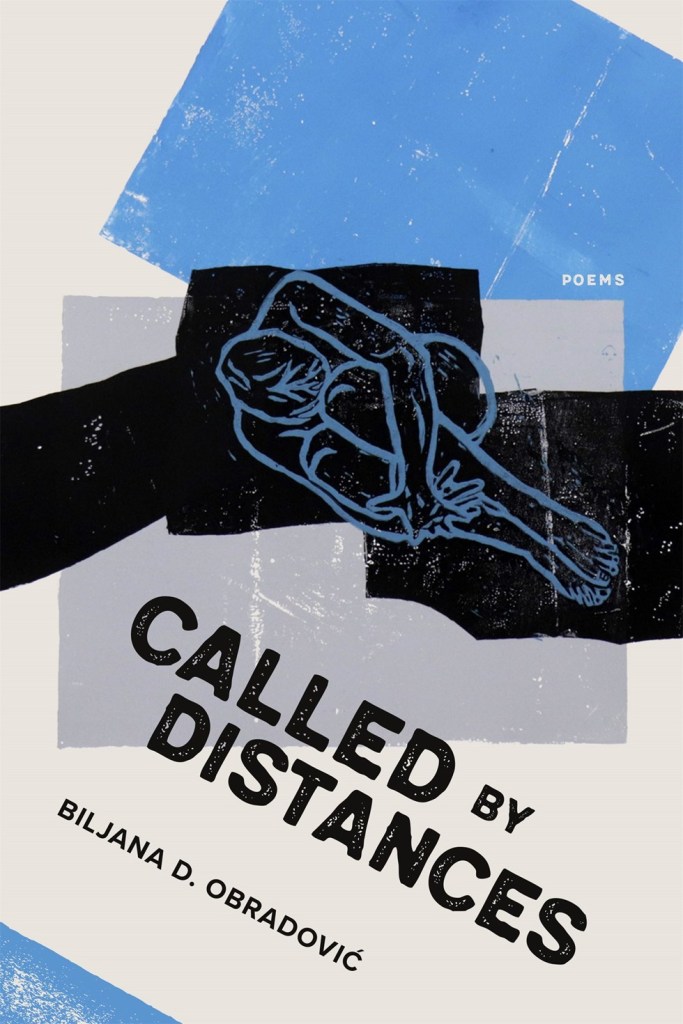
Called By Distances
By Biljana D Obradoviċ
LSU Press
Published January 15, 2026







0 Commentaires