“The End of Romance” is Cerebral, Messy and Made for Book Clubs https://ift.tt/VRaeUEb
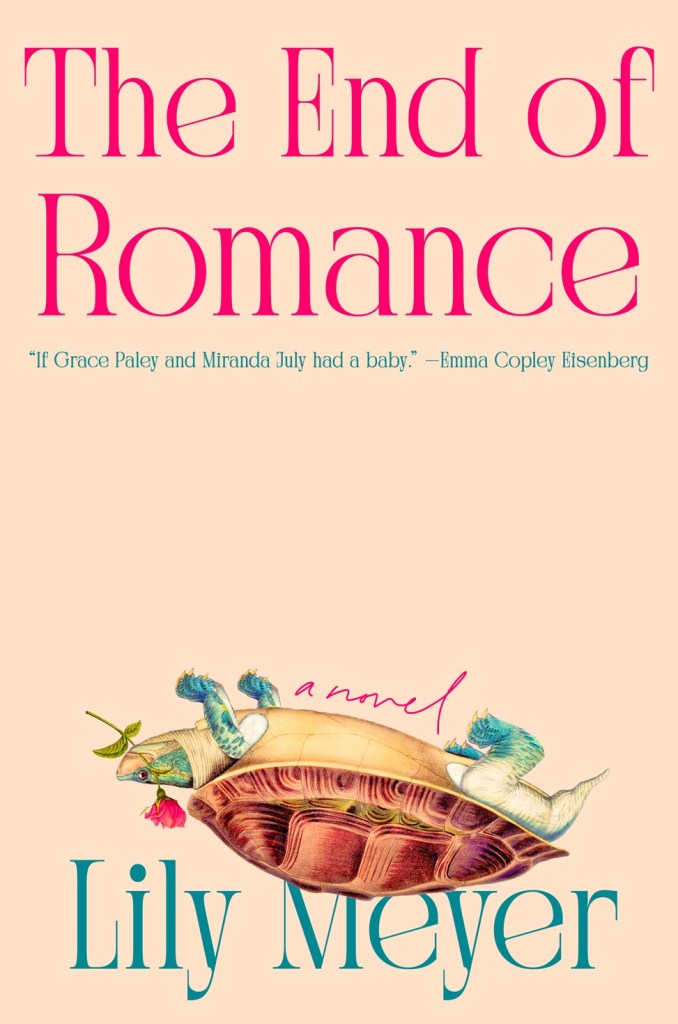
Some books are meant to be book club books, and I sincerely believe The End of Romance by Lily Meyer should be on the list for your next book club pick. This is a polarizing book. Some are going to love the philosophical, anti-romance of it all. They will eat up the cerebrally prone main character, Sylvie, and probably gather a few philosophy books along the way to add to their TBR. However, if you are a die-hard RomCom-er or someone who needs the traditional HEA (happily ever after) in a book, you are not going to love the full scope of The End of Romance. That’s not to say there aren’t elements of romance in Meyer’s novel, but this story will feel truer to the complications of real life and leave you hanging on the edge longer than a traditional romance.
Sylvie grew up in New England in a home where she never fully got to be herself. It was in Florida, with her holocaust-surviving grandparents, where Sylvie felt truly seen and loved for who she was. Then, early in her teens, Sylvie met Jonah and the two made quick work of becoming high school sweethearts, then college sweethearts, then young adults married and starting out. Early on, we know Jonah is not as devoted to Sylvie as she is to him, but when her grandparents die and she loses her support system, we start to see Sylvie lean on him more and isolate herself from friends. Once in college, there may have been an incident of physical harm that Sylvie convinced herself (along with Jonah’s help) was all her fault. But as they become older, as Jonah stays on the path of a powerful, successful man and Sylvie slips away from the woman she used to be, Jonah becomes more verbally and emotionally abusive. Meanwhile, Sylvie’s parents encourage her to do better and become the kind of wife he needs.
The first part of this book is tough, I can’t lie. If you are a victim of an abusive relationship, please consider this your flashing neon trigger warning because it is an uncomfortable (but all-too-realistic) section to endure. But, rest assured, the book does not end there. In part two, Sylvie escapes her suffocating and diminishing relationship and goes on to get her PhD in philosophy, where her dissertation focuses on a new concept she is trying to live daily: rewriting the rules of love and not giving in to the societal norms of romance.
Her new lease on life is a sex-positive exercise in one-night stands, minimal commitment, and keeping any small sliver of romance or relationships in the “private” and not the “public” part of her life. This idea works well with Robbie — a corporate lawyer who suffers from, at times, debilitating depression, but has a remarkably open outlook on relationships. He’s open to Sylvie’s desire for non-monogamy so long as he gets to be with her. Robbie is everything Jonah wasn’t — kind, submissive, respectful, understanding. He becomes a safe place for her after so many people have let her down.
During their time together, Sylvie digs into her studies and chips away at her dissertation. “Sylvie recommitted herself to philosophical inquiry. She needed an outlet for her feelings. Also, she needed to justify them. She needed to find, somewhere in the vast literatures of moral philosophy and feminist thought, a framework within which to safely pursue a thing — she was not yet ready to entertain the word relationship — with Robbie. She understood that she was setting out to think herself into love, but she had gotten dangerously close to it already. All she could hope to do was reassert some bit of control.” She is focused. Until she isn’t.
Enter Abie. His character enters the game and flips the board upside down. Abie is the opposite of both Jonah and Robbie. He is a family man, through and through. He is grilling shrimp on the patio and watching the basketball game with a beer. He is a man who wants to raise a family near his family. He loves Sylvie, but he wants it in private, public, and everywhere.
He challenges her in ways she never expected after the years she’s spent philosophizing about the end of romance. She wants the antithesis of convention, and he is convention incarnate. All too soon, progress on her dissertation stops and Sylvie is left with feelings she’s worked so hard to diminish: “A great gust of girlish joy went through her. Immediately after it came shame and alarm. She should not be reacting to marriage talk with pleasure. She should be shutting it down.” Sylvie can sense all the hard work starting to disintegrate at the hands of this new man in her life, but in many ways, she just doesn’t care.
Throughout The End of Romance, Sylvie makes her fair share of mistakes. She is not always a good friend. At one point, her best friend, Nadia, points out, “You’ve let your ideas totally blind you. You’re so rigid about why you think — what you think you think — that you can’t even see that the way you want people to live is impossible even for you.” Her priorities as a PhD candidate and adjunct professor change.
There were cringeworthy scenes aplenty, and more than once, I would have liked to sit her down and talk with her about her decisions. Yet, somehow, through it all, she is a character I wanted the best outcome for. Sylvie gets out of an abusive relationship and gets her PhD. She has intimate conversations with a turtle that lives inside her head. She is cerebral and hedonistic. In short, there are so many ways Sylvie could have been an unlikeable character, plain and simple. Yet, through nothing short of skilled story weaving, Meyer was able to pull Sylvie through one collapsing over-philosophized scenario after another and made her a lead readers root for. The way she shows up for herself and takes ownership of her poor choices (albeit messily), and stands up for a friend in her time of need is a true testament to the kind of person Sylvie is — mistakes and missteps and all.
As for Sylvie, and Robbie and Abie… were their endings earned? Throughout the novel, Sylvie’s ideals are torn down, then rebuilt, then blown up altogether. The narrator states, “What she feared was herself and what she wanted.” It is this fear she must learn to make amends with in order to find the future she truly wants. It’ll be up to you to decide if you agree with her understanding of romance in the end. Are you in the camp Sylvie was in pre-PhD? Do you agree with the idea of romance as a private versus a public entity? Or are you reserving judgment until you see her final choice? Right or wrong, this is Sylvie’s story, and love it or hate it, we’re all just along for the eye-opening, provocative, and inventive ride!
FICTION The End of Romance
By Lily Meyer
Viking
Published February 3, 2026







0 Commentaires