Horses Bring Healing and Regeneration in “Fairfield County” https://ift.tt/Xa9SUoE
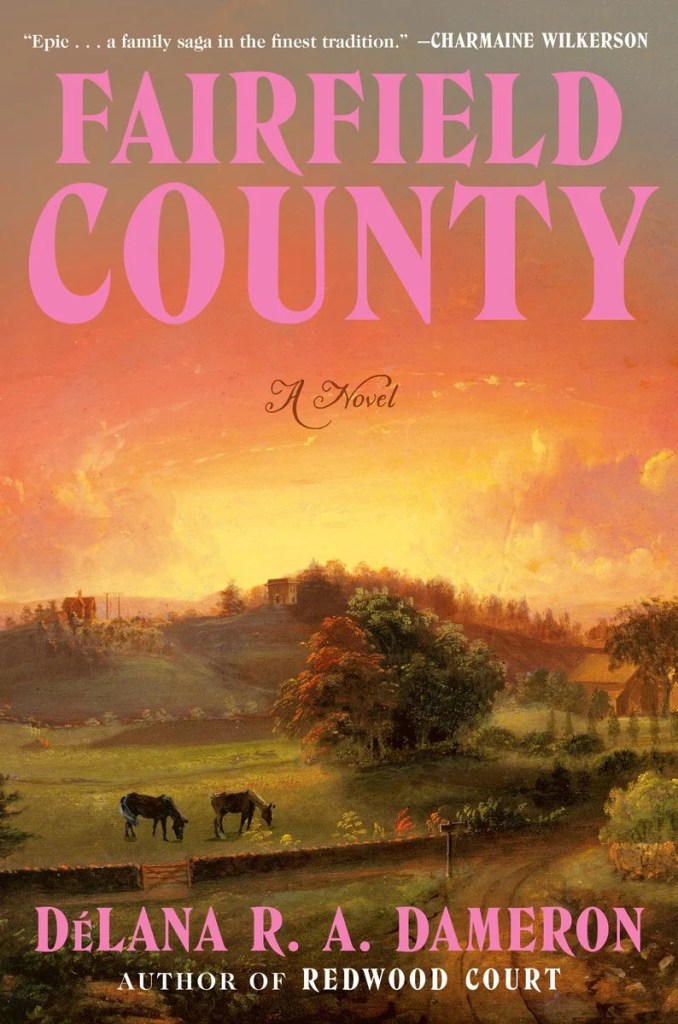
DéLana R.A. Dameron’s second novel, Fairfield County, published posthumously, spans four generations of Black horsemen and women, from 1937 to 2014. Like her debut novel, Redwood Court, it is titled after its setting. In Fairfield County, South Carolina, Moses Bolton, “born just a few steps outside of a life of bondage,” buys property, establishes his horse training services, and quickly gains the reputation of “an exceptional horseman.” Fairfield County, the narrator explains on the first page, “came to be populated by so many Black folks” when “white landowners had just up and left the land for ruin, looking for a new industry.” Moses buys his land cheaply and attains security in property, something to pass onto his future generations.
For the Boltons, having land means having horses, which have been the Boltons’ specialty through slavery into emancipation and the Jim Crow South. Like many people who love horses, Moses does more than just train them to perform well; he forges an intimacy with the animals. When the horse he trained, Pal O’Mine, gets put in a race, Moses “slapped the fence and hollered and stomped his feet, figuring if a horse can feel a fly land on its back, surely Pal would know the weight of him, the full weight of him, pounding the earth through the turf, the way his heart had sped up as if he were in the race with Pal. He’d feel it.” Horses aren’t just a source of income for the Boltons. The animals course through their blood. Moses depends on a felt sense and instinct in his relation to them, as well as the knowledge that has been passed down to him through his ancestors.
The transitions between generations happen quickly: Moses begets Lloyd, and Lloyd begets Dwayne. Less than halfway through Fairfield County, the omniscient narrator brings us to Nikki, the novel’s indisputable center. By the time she is born, her father Dwayne has suffered through a double tragedy: his mother dies in childbirth, and his father Lloyd leaves him to be raised by his grandparents Moses and Lillie, who eventually die in a fire. Dwayne buries his past in a silent grief, including his attachment to horses. But this generational canyon doesn’t prevent Nikki from finding her way to the animals through her father’s friend and fellow Iraq War veteran Sonny.
Nikki’s young love of horses is glorious and all-encompassing. More than a hobby, horses are a way of life she is immediately drawn to despite not knowing her Bolton legacy. Riding and helping Sonny with his horses helps her through her own challenges: her difficult relationship with her mom, her dad’s silences, and especially “the incident.” One day in high school, while Nikki is sitting at her desk, a cop comes in, “swooped her and the desk, and then slammed them both to the floor.” She is accused of being difficult, though she doesn’t say a word. Nikki is physically unhurt, but “the incident” leaves her paralyzed, unable to step into her small town without ducking her head. The racial implication of this attack is clear to her father, who allows Nikki to quit school and focus on learning the horse trade from Sonny. On Sonny’s farm, she is “remind[ed] of the peace she found in the company of horses and what it had meant to find her heard.”
Nikki carries on her family’s legacy without knowing she has one; she excels at rodeo performances and begins to work with Sonny rounding up cows. Her instability of not knowing about Moses and his horses emphasizes the great gaps within Black family trees, how white people throughout history have ravaged Black families, during slavery, Jim Crow, the current prison industrial system, and police violence. That Nikki manages to discover a way of being in the world she loves and that reflects what her family has historically excelled at brings her healing and regeneration to her. Through Nikki’s devotion, Dwayne must face the losses of his past, and the Black community of Fairfield County comes together to take pride in its heritage, as landowners and cowboys.
It wasn’t a surprise to me to learn that during her life, DéLana R.A. Dameron was an avid horsewoman, though it did surprise me that she did not grow up around horses but came to them “so close to midlife,” as she writes in her acknowledgements. A deep knowledge and joy of these animals suffuses almost every page of Fairfield County, from Nikki’s rope throwing in the rodeo, to how the horses move around people and through the fields. This late horse coming-of-age is all the more poignant for how briefly it lasted. Dameron died in November 2025. To lose a writer at the height of her powers is always tragedy, for there were certainly books within her that we will never read. This loss is compounded by Dameron’s role in her community as a steward and founder of Saloma Farms and fierce advocate for the legacy of Black horsemanship.
In a conversation I had with Dameron’s editor about the state of the manuscript at the time of her death, Maya Millet said that the big decisions around character and structure were completed. Dameron had been working on a Bolton family tree that didn’t get finished (though the lack of this visual didn’t impact my reading). In discussing how Dameron planned on drawing this tree, Millet said that “DéLana drafted everything by hand first. All her book drafts, research, characters’ backstories, and lineages were handwritten in notebooks. She also had a lineage tree for the horses.” This detail about Dameron’s writing process stuck with me, her careful, deliberate worldbuilding stored on paper. It is, in essence, the opposite of Dwayne’s approach to his past; instead of sequestering and hiding, notebooks imply a generous grappling and proliferation of words at an arm’s length, a visual and tactile reminder of the pages your pen has seen.
At the beginning of Fairfield County, Moses says that “he saw value in the idea of trying to make decisions and ‘investments’ with an eye towards a future so far ahead of him he might never see it to fruition, but that maybe his offspring might reap.” He admits to not trusting this kind of foresight because it places him in league with white people whose evil had allowed them “to round up whole humans like livestock” as a guarantee for their future. But simply buying land doesn’t keep the Bolton family tree whole. Instead, the family is made whole by what they do on that land, how they welcome in neighbors and fellow veterans, how they extend care to people and animals. Even more so because DéLana R.A. Dameron is no longer with us, we are lucky to have this full-hearted book of proliferation and healing.
FICTION Fairfield County By DéLana R.A. Dameron Dial Press Published June 9, 2026






0 Commentaires